Showing posts with label image gallery. Show all posts

Tuesday, August 30, 2016

Photos from Argus Day 2016!

We hope all our fellow Argus lovers managed to get out and enjoy Argus Day! This year it fell on Argust 16th, 2016 and both Nicole & I managed to take our little Argus' out for a stroll. We were excited that so many of our film friends over here at Beau have Argus cameras as well and also got out there to shoot a couple of rolls! Check out a selection of our photos and those submitted by fellow Argus shooters below and feel free to still submit your Argus Day photos if you haven't already! You can email them to film@beauphoto.com.

For more info about this yearly event, check out our previous post too:

http://beauphoto.blogspot.ca/2016/08/get-ready-for-argus-day-2016.html

As well as the Argus Collectors Group page:

http://www.arguscg.org/

Check out their submissions for this year here:

http://www.arguscg.org/events/argusday/2016/


Nicole - Argus A - Kodak Commercial 200 135-8


Meghan - Argoflex 75 - Cut down roll of Fuji NHG 400 120 - (Bit of a light leak because it rolled onto the 620 spool very loosely!)


Bruce McLellan - Argoflex TLR & Argus A4


Argoflex TLR - Fuji Acros 100 120


Argus A4 - Kodak Pro Image


Troch - Argus 75 - Arista Edu Ultra 400 - Processed in XTOL stock for 8.25 minutes


Christopher Evans - Argus C3 Matchmatic, M450 & Super Seventy-Five

Argus C3 Matchmatic - Ilford Pan F film (expired 1990) - Developed in Diafine.


Argus M450 - Kodak T-Max 400 - Developed in Ilfotec DD-X


Argus Super Seventy-Five - Ilford Pan F Plus - Developed in Rodinal


Tuesday, May 17, 2016

Reviewed! Fujifilm X-Pro2...


After using my new X-Pro2 for well over a month, I've finally managed to get my full review published on my own blog. I've included a fair bit of material, including details on the performance of most lenses after testing many different Fujifilm lenses, nine of which I actually own myself now. There are details of the operation of the Hybrid-Viewfinder, card write speed and buffer size tests, comments on ergonomics, user interface, focus performance and, of course, image quality. Link to the review is above.

To summarize, I really enjoy shooting with the X-Pro2. Not only does it have great image quality, but it also has quick and reliable AF as well as very snappy performance overall, with a very fast and responsive shutter mechanism (that also sounds great) and minimal EVF blackout between frames. It has a generous raw buffer, exhibits fast card write times (with UHS-II U3 cards) and is generally responsive enough that you never feel like you are waiting for the camera to catch up. With its enhanced Hybrid-Viewfinder, revised control ergonomics, a custom My Menu, a configurable Q menu as well as numerous customizable buttons, it is also one of the most fluid cameras I've used, one I've been able to configure so that it's perfectly suited to my style of photography.

As with any camera, it is not perfect and there are some quirks and annoyances detailed in the review as well, relatively poor battery life being one of them. That said, none of the issues are even remotely deal breakers for me, and I can still highly recommend the X-Pro2 for most types of photography.

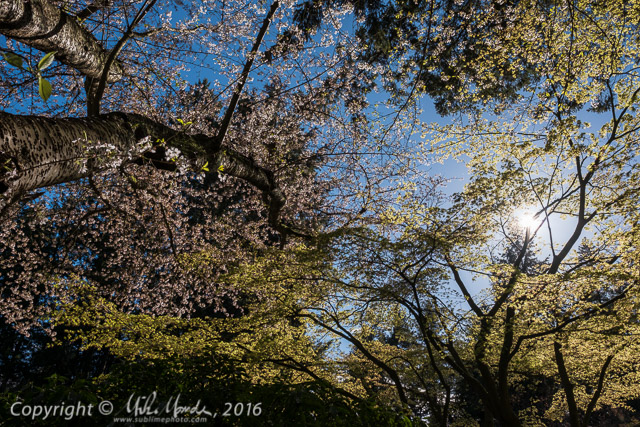
If you just want to see a gallery of images taken with the X-Pro2, and deal with reading the text later, click on the image below, taken in the Nitobe Gardens at UBC. Speaking of images, there are also numerous full-resolution files you can download that are linked within the review. Enjoy!


Gallery (110 images): Fujifilm X-Pro2 Review Gallery 

Sunday, April 26, 2015

Review: Deep ND Filters Compared (updated)...


[Update April 2015: Added a few comparison images and at the end of this post taken with a Hoya Pro ND1000, as well as some notes about that filter.]

This article is a quick review on some of the latest and greatest IR-blocking ND filters and how they stack up against the “old standby," a standard B+W 10-stop ND which has no IR filtration. The above image is a screenshot from Lightroom, showing a side-by-side comparison with the image thumbnails conveniently colour coded to match the colour cast of the filter used! The B+W 10-stop ND gives colour images a somewhat ruddy-brownish colour cast (the red thumbnails) and it has been speculated that this is due to infrared light affecting cameras with sensors that still have some residual IR sensitivity.

In response to the IR issue, several companies have come along and made filters that purport to solve this with the promise of easily corrected colour balance. The issue is that if a scene being photographed is heavy in IR, a sunny day with foliage perhaps, or anything that reflects a lot of IR, then a deep visible light blocking filter that lets through IR, like the B+W, might affect some areas of an image differently than others, meaning that a simple WB correction in post might still yield an image with strange looking colours or colour casts. There are two image galleries that accompany this article as follows…

There are details about what adjustments were made in the second colour corrected gallery. Also, the filters being discussed in this review are as follows (with the image filename suffix indicated in brackets, also detailed in the galleries)…

- (TA) Tiffen Apex XLE-series 10-stop IRND
- (BW) B+W 10-stop ND (110 ND 3.0 - 10 BL 1000x
- (FHF) Formatt-Hitech Firecrest 16-stop IRND


Monday, January 26, 2015

Fujifilm's Fifty-Sixes Compared! The APD Effect...


A large version of the above here: APD-f1.2-lights.gif

Fujifilm has two versions of the their 56mm lens, the regular Fujinon XF 56mm f/1.2R and the Fujinon XF 56mm f/1.2R APD, one that has an internal apodization (APD) filter. Before I get into the technical lens details, let me mention that you'll see a number of animated GIFs in this blog posting that are comparisons between those two lenses wide open at f/1.2. Note that GIFs only have 256 colours in total and are dithered to allow them to display a 24-bit colour image. This dithering can be visible as some roughness or even slight banding in these animations. Also, for those who just want to dive in and look at images, following is a link to a full gallery with all the photos mentioned in this posting, each carefully shot at seven different f-stops with both lenses - 70 images in total! Please note: this gallery is hosted on the author's personal website and the links in the gallery won't get you back here. Since the gallery will open in a new window, just close that to return to this posting...

Gallery: Fujifilm's Fifty-Sixes Compared! The APD Effect…

I chose to test the lenses at third-stops from f/1.2 to f/2 and then go right to f/2.8 and finally f/4 since the effect becomes so minimal once you stop down past f/2.0. The photos in the sample gallery were all shot on a tripod, with the two 56mm lenses changed carefully as to not move the camera. For some reason, I did notice a hint of movement on some sets that was likely my forgetting to sufficiently tighten the panning-lock on my ball-head, however, there was definitely a distinctly different "aim" to both 56mm lenses, something I found a bit unusual. Even though the shift was only slight, it was bothersome enough that on all the photo groups, I carefully cropped them ever so slightly, then nudged the crop frames around until I got the best superposition of the regular set with the APD set. While this was rather tedious, luckily Lightroom made it fairly painless. Once I had the f/1.2 versions aligned, I could just sync the crop settings on each group of smaller f-stops.

In order to show some of the bokeh effects more obviously, I heavily cropped two sets in the gallery, namely photos 15-28 and 57-70. On those, the frame you see is roughly a third the area of the whole field-of-view. All the others only have a tiny bit of cropping, just enough so I could achieve perfect alignment of each set of shots, well almost perfect at least. Lastly, there was some movement of branches due to wind, especially in photos 43-56.

For some less technical and more aesthetic samples, see my own personal blog posting from a week earlier (also opens in a new window)...

Post: Nicole with the Fujifilm XF 56mm f/1.2R APD

So, now for some details of what makes Fujifilm's 56mm APD lens (almost) unique...

Saturday, January 10, 2015

Gallery: Testing the Fujifilm 50-140mm f/2.8 Zoom


I finally had a chance to really put the new Fujifilm XF 50-140mm f/2.8R LM OIS WR zoom lens through its paces on this past Christmas day. You've probably already seen my preview blog posting of this lens at this link here, but for that one, I only had the lens briefly and took maybe a dozen shots with it. On the 25th, I took nearly 300 shots and you can see some of the selected images in a gallery on my personal website by clicking on the above image. The high-res images are nice and big, 3000 pixels in the long dimension, so you can get a better idea of how good the image quality is on a wider range of shots.

My conclusions hold by and large: the new professional zoom from Fujifilm is spectacularly sharp, focuses very quickly and has effective image stabilization. On my X-E2, with the added Fujifilm handgrip, I actually didn't find it to be unpleasantly heavy, although it is certainly a large lens. Following are some additional comments about this lens, now that I have tested it more thoroughly.